What Are Examples Of Business Videos That Work Well For Service Providers?
Key Takeaways
For service providers, you can develop trust and authority through testimonial, case study, and expert interview videos that highlight real customers and results.
Explainer and FAQ videos give you a chance to tackle common questions or pain points. They assist your audience in understanding how your services offer effective solutions.
Thought leadership and educational content share your brand as an authority in the industry, building reputation and trust among viewers.
Humanizing your brand with behind-the-scenes, company culture, and employee spotlight videos lets you connect emotionally and personally with your audience.
Making sure video content is authentic, clear, and empathetic will maximize viewer engagement and foster stronger connections with your desired customers.
I’m curious – what are some examples of business videos that work well for service providers?

Good business videos for service providers are client testimonials, how-to service explainers, staff interviews, and brief case studies. These formats help you build trust, demonstrate your team’s capabilities, and provide tangible evidence of your impact. Your viewers witness actual examples of your work, with either testimonials from satisfied customers or easy-to-understand tutorials that demystify your approach. Service walkthroughs or FAQ videos make it easy for them to know what to expect and answer key questions. Behind-the-scenes videos or interviews allow you to showcase your team’s expertise and culture. In the body of this post, you’ll find which video types suit your needs best and how to plan them for actual outcomes.
What Types Of Business Videos Work?
The kind of corporate videos that work for service providers are those that talk your audience’s language, suit their needs, and gain their trust. Whether you want to establish credibility, address a pain point, or highlight the human beings behind your brand, getting your video marketing strategy in sync with your goals and audience is crucial. Here are the most effective types of corporate video examples.
Testimonial and case study videos for customer trust
Explainer and product demo videos for solving problems
Thought leadership and educational videos for authority
Company culture and behind-the-scenes videos for connection
Product overview and comparison videos for showing value
Event recap, onboarding, and series-style videos for ongoing engagement.
1. The Trust-Builder
Trust is one of the most important currencies for service providers, especially in corporate video content. Testimonial videos featuring real clients help potential customers clearly see the results you deliver and the reliability of your services. Case study videos go a step further by walking viewers through how you supported a client’s success from start to finish. These stories become even more powerful when they include authentic, user-generated content—unscripted footage created by customers using their own devices—which adds credibility and relatability. Expert interview videos further reinforce trust by showcasing your commitment to quality, professionalism, and industry standards through respected voices in your field.
2. The Problem-Solver
Explainer videos are non-negotiable if you want to break down complex concepts effectively. They address burning questions quickly, often utilizing animation or minimalist graphics, making them a key component of video marketing strategies. Product demo videos are equally important, as a recent study shows that close to 69% of consumers depend on demos before making a purchase. These videos demonstrate your solution at work, step by step, using clear copy and images. Additionally, FAQ videos answer the most common questions, saving time for both you and your clients. You can also showcase brief success stories through corporate videos, demonstrating how you aided another client, ensuring that short videos of 1 to 3 minutes keep attention high and are easy to share.
3. The Authority-Figure
Thought leadership videos set you apart as an industry expert and are crucial for effective brand video strategies. You can leverage these to broadcast exclusive perspectives, industry trends, or predictions. Learning content—how-tos, deep dives, or research highlights—demonstrates you don’t just peddle services; you understand your industry. Here, adding interviews with industry experts builds credibility and invites new perspectives. Data-driven videos, like corporate video examples or animated graphs, give you a chance to support claims with numbers. Docu-series or series-style videos work as a long-term investment, building a following over time and positioning you as a source of ongoing knowledge.
4. The Human-Connector
They want to know who they’re working with, which is why company culture videos fling wide your doors, inviting viewers inside to witness your team’s ethos and routine. Employee spotlights serve as effective brand videos that humanize your brand, particularly when you feature stories with diverse backgrounds. Community involvement videos, like volunteering or local partnerships, demonstrate that you care about more than just making a profit. Additionally, behind-the-scenes videos can be a powerful corporate video example; they can be as concise as a couple of seconds, capturing your crew at work or event prep. It matters a lot that these videos have captions, as eighty-five percent of social media videos are watched on mute, and captions increase average view time by twelve percent.
5. The Value-Demonstrator
Product overview videos explain the ins and outs of your offering, making them essential for effective video marketing. Comparison videos pit your offer against competitors, demonstrating what sets you apart through compelling corporate video examples. Case study videos with numbers attached, such as time saved and money earned, make your value tangible. Customer success stories bring the human element and demonstrate actual results. Event videos and onboarding videos are great, too. Event recaps, usually one to three minutes, are perfect for internal sharing or sharing about future events. Onboarding videos, which can be five to ten minutes, help clients get started or assist with staff training. Live videos allow you to engage in real time and typically result in higher sales conversion.
What Makes A Video Successful?
What makes a successful brand video for service providers is that it fulfills its objective, whether it’s trust-building, educational, or conversion-driving. Roughly 85% of consumers want more company introduction videos from the businesses they engage with, so it’s imperative you rise to their expectations for clarity, quality, and relevance. The winning videos were concise, resonated on an emotional level, and incorporated visuals and audio that adhered to industry standards. They keep retention in mind, as short, focused videos hold attention best. Social media-optimized videos reach a wider audience, while urgency-stressed or truly valuable demonstrations tend to have better engagement. Just 3.5% fulfill high visual design criteria, underscoring the importance of emphasizing production quality. Here are the key elements that drive video success.
Clearly, what you’re trying to say is clear with no jargon and no fluff, so your viewers get the point and don’t get lost.
Empathy and emotional connection make the viewer feel seen.
Good video and audio that convey a slick, professional look.
Engaging stories or scenarios that feel relatable and timely.
Clear calls to action so viewers can easily see what to do next.
Authenticity
Real customer testimonials give your corporate videos a trust level that’s difficult to counterfeit. When folks watch other people speaking candidly about your service, it creates trust. Don’t over-script it; let your customers tell you what they think in their own words. This keeps the tone authentic and approachable. Throw in some behind-the-scenes footage, like your team in action or a mini-tour of your process. These little touches lend humanity to your brand and demonstrate that you have a commitment to transparency. Real-life situations, such as a client fixing a major issue with your assistance, help your brand come across as relatable and credible, particularly to worldwide audiences seeking effective brand video outcomes that might translate to their own experience.
Clarity
You have to simplify your message. Utilize common-sense language and simple imagery so that anyone can understand. Break down big ideas into small, digestible chunks. This keeps people engaged and aware of the benefits you provide.
Make videos short and snappy. With a maximum of 30 minutes and an average retention rate of only about 10%, fast is the key. Break it up with easy-to-read headings or graphics to direct the viewer. Include an obvious, straightforward call-to-action at the end, such as “Book a call” or “Download a free guide.” This straightforwardness makes it simpler for viewers to take the next step, particularly when you include a time element like “Offer ends soon.
Empathy
Display stories that reflect your viewers' day-to-day challenges or aspirations.
Solve a common pain point and provide a solution that seems achievable.
Mix up the on-screen talent to mirror your worldwide audience.
Highlight moments where your service made a real difference.
Storytelling is potent, especially in corporate videos. Telling customer journeys, particularly those that begin with a problem and conclude with a demonstrated gain, such as increased efficiency or annual savings, can be effective brand video examples. These stories make viewers feel seen and safe, enhancing emotional connection and driving engagement.

How To Align Video With Goals
To create effective business videos, you have to align each video with business objectives. This implies that you know what you want the video to do, who you want to reach, and how you’ll gauge if it succeeds. With a plan in place, your corporate videos will be far more likely to help you attract new clients, answer questions, or build trust with your audience.
Begin with goals for each video. Do you want to get more leads, help your existing clients better understand your service, or resolve a common pain point? For instance, if you operate a consulting service and frequently receive the same pricing question, create a quick FAQ video that responds to it in layman’s terms. This saves you time and helps your viewers get what they need quickly. Establish KPIs for every video. If you’re trying to get more sign-ups, measure conversion rates. If you’re trying to build brand awareness, look at views and engagement, particularly in your corporate video examples.
Customize your video around the audience you’d like to address. Consider your audience’s age, occupation, and what keeps them awake at night. For example, a video aimed at young professionals about your cloud-based accounting service should be straightforward and use real-world examples, while a video for managers could emphasize data security and compliance. Short videos, which are less than six seconds, are best for capturing attention. Studies indicate these snackable videos hold more than 75 percent of viewers watching to the very end. This holds up nicely on social media, where they scroll fast, making them perfect for marketing videos.
Incorporate stories in your videos. Don’t just list features; demonstrate how your service solved someone’s actual problem. Start with a simple story: a client had a problem, tried your service, and got results. Put a face and a name on it to make your message stick. Audiences remember stories more than facts. Use emotion to forge a more powerful connection, perhaps display a customer’s gratitude post-assistance or an uplifting outcome. This approach can turn into a successful brand video that resonates with viewers.
Keep tabs on your videos. Use analytics to discover what’s effective and what isn’t. Consider metrics such as view rates, engagement, shares, and above all, conversions. If a video has high views but low conversions, switch up your call to action or tweak the message. Always compare results to goals. If you discover viewers tend to abandon after 5 seconds, then make your videos shorter or lead with the crucial info to enhance your video marketing strategies.
Let feedback make you better. Query viewers on what they enjoyed or what is lacking. Check comments, run polls, or send out surveys. This makes your next video more valuable. Continue to experiment and hear them out. Incorporating viewer feedback can lead to more effective corporate video production processes.
Don’t make the same video for each channel. A video for your website can be longer and more in-depth, whereas a video for social should be shorter and more visual. For email campaigns, deploy short clips that make the point quickly. Each platform has its own style that works best, and understanding these differences can elevate your corporate video marketing.
Align your videos with the buyer’s journey. Initially, use explainer videos to demonstrate your activity. In the middle, include testimonials or case studies. At the end, use a strong call to action to guide them forward. This is how you guide your viewers from discovering your service to converting or contacting you, ultimately enhancing your overall video marketing effectiveness.
Why Your Process Is Your Product
Your process is so much more than the actions you use to provide a service; it’s the essence of what differentiates you. In the service provider world, clients almost never glimpse the sweat behind the curtain. These invisible steps are just as valuable as the end product. When you share your process through corporate videos, you expose the standards, care, and craftsmanship that mold your work. This builds trust, demonstrates your values, and aids people in picking you over the competition. A great process, demonstrated transparently, does more than differentiate you; it defines people’s perception of your brand video's worth and excellence.
Showcase the unique processes that differentiate your services from competitors.
Concentrate on what you do differently in your corporate video. If you provide IT consulting, demonstrate how your work group begins with a comprehensive needs analysis, employing detailed charts and client discussions. If you own a design agency, take viewers on a tour of your creative process, from initial sketches to client feedback, in your company introduction video. If you own a cleaning service, you could showcase your green cleaning process or rigorous safety inspections that differentiate you from those who use generic methods. These videos are not for show; they let your audience witness the attention, strategizing, and craftsmanship behind every move. By demystifying your distinctive process, you allow prospective clients to understand why your service is priced as it is and why it provides more value. A beautifully constructed process may be one of the main reasons people pick your company despite a higher price.
Use process videos to illustrate how your services are delivered step-by-step.
Step-up videos, such as effective brand videos, help people see what to expect. A law firm could demonstrate how it manages client cases, from intake through research, advice, and follow-up. An HR agency can describe how they vet, interview, and match candidates to employers. These corporate videos aren’t just informative; they give your prospects a transparent glimpse into your values and commitment. Clear visual breakdowns decrease confusion, reduce anxiety, and make customers feel in control. This transparency builds a lot of trust. When they know what happens at each stage, they are more comfortable putting in their time and money.
Highlight the benefits of your approach to build confidence in your offerings.
Use real examples to illustrate how your process gets better results, especially through effective brand video creation. If you’re a software developer, demonstrate how your testing and feedback cycles lead to smoother launches, akin to successful brand video examples. A health consultant might show how weekly check-ins and incremental progress tracking enable clients to achieve goals quickly. By emphasizing the efficiency gains, cost savings, or quality improvements your process offers, you provide purchasers with compelling reasons to choose you. Ultimately, an energy-saving process or one that meets rigorous safety standards can be a significant advantage for both you and your customers.
Share behind-the-scenes footage that emphasizes quality and attention to detail.
Show your team in action, troubleshooting, or verifying results. SHARE how you conquer hard-to-solve assignments or ensure that every step has a high bar. For instance, a translation service could demonstrate how it utilizes natives for precision, or an event planner may reveal how every item is checked off before the big day. These behind-the-scenes moments are the evidence that your standards are not just lip service—they are real, breathed practices. This transparency can render your service more personal and trustworthy, enhancing your corporate video marketing strategy. It gives them a taste of your brand’s values, such as care, craftsmanship, and pride in the work, making it an effective brand video.
How To Measure Video Impact
To truly measure the effectiveness of your corporate videos, you need to analyze the metrics that reveal how individuals view, interact with, and respond to your content. For vendors, monitoring these figures lets you understand if your video marketing strategies are concise, valuable, and achieve your objectives. With so many forms of business video, such as explainer videos, testimonials, and product walkthroughs, figuring out what works best is all about how you analyze the outcome.
Engagement Metrics And Their Significance
Video Completion Rate
This metric shows the percentage of viewers who watch the entire video. It matters because a high completion rate indicates that your message is engaging and successfully holds the viewer’s attention from start to finish.
Click-Through Rate (CTR)
Click-through rate measures the percentage of viewers who click on a call-to-action (CTA) or link within or after the video. This metric is important because it reveals whether your video is effective at driving interest and prompting viewers to take action.
Conversion Rate
Conversion rate represents the percentage of viewers who turn into leads or customers after watching the video. It matters most for measuring real business impact, as it directly reflects how well the video supports your sales or lead-generation goals.
Average Watch Time
Average watch time shows how long viewers watch your video on average. Longer watch times suggest that your content is relevant, valuable, and engaging to your audience.
Play Rate
Play rate indicates the percentage of page visitors who actually start the video. This metric helps you evaluate whether your video’s placement, thumbnail, or surrounding content is compelling enough to attract viewers to click play.
Completion rates help you understand if your corporate videos are the right length and engaging. Short videos, about 1 to 2 minutes long, tend to hold people’s attention through to the end. If you notice folks dropping out too soon, consider revising your script or enhancing your visuals with effective explainer video techniques. Click-through rates and conversion rates are both crucial when you want people to sign up, book, or contact. Be sure to place a clear call to action that stands out and uses powerful verbs. Your CTA needs to be visible, either as a button or a simple link. When you demonstrate genuine value in terms of cost and time savings, your conversion rates can increase more than 14 percent.
Analyze Conversion Rates
The most straightforward indicator of video impact is conversion rate, particularly in corporate videos. That’s how many viewers take whatever action you want, like booking a call or purchasing a service. Keep it simple for the viewer. When you reveal specifics such as where your product is from or how your service works, you increase purchase intent by more than 70 percent. For additional insight, see where viewers drop off, which corporate video examples convert best, and which CTAs are clicked the most. That way, you can discover what works and what doesn’t.
Use A/B Testing
A/B testing involves presenting two different corporate videos to two groups to determine which performs better. You can mix up the video style, switch the story, or even alter the CTA. Experiment with a short marketing video versus a long one, or one that features a compelling visual story. Since only 3.5% of videos excel in visual design, aim to make your corporate video appear neat and contemporary. Utilize clear graphics, legible text, and excellent lighting to see which version captures viewers' attention and generates more clicks or leads.
Gather Viewer Feedback
Numbers alone can't tell the whole story of your corporate video. Get viewers’ opinions on the video by using surveys, polls, or comments to discover whether your message is clear and if they feel a connection. Storytelling in your video marketing makes people remember your business and feel something about your service. If you employ a problem/solution story, you can demonstrate how you address actual issues. Use this input to patch weak areas and improve your message.
How To Start Without A Big Budget
Business videos don’t have to be high spend or require a big crew. If you’re a service provider, you can achieve powerful results with straightforward tactics and some clever decisions. With the right video marketing strategies, you’ll demonstrate your message, connect with more people, and enhance your brand while saving cash.
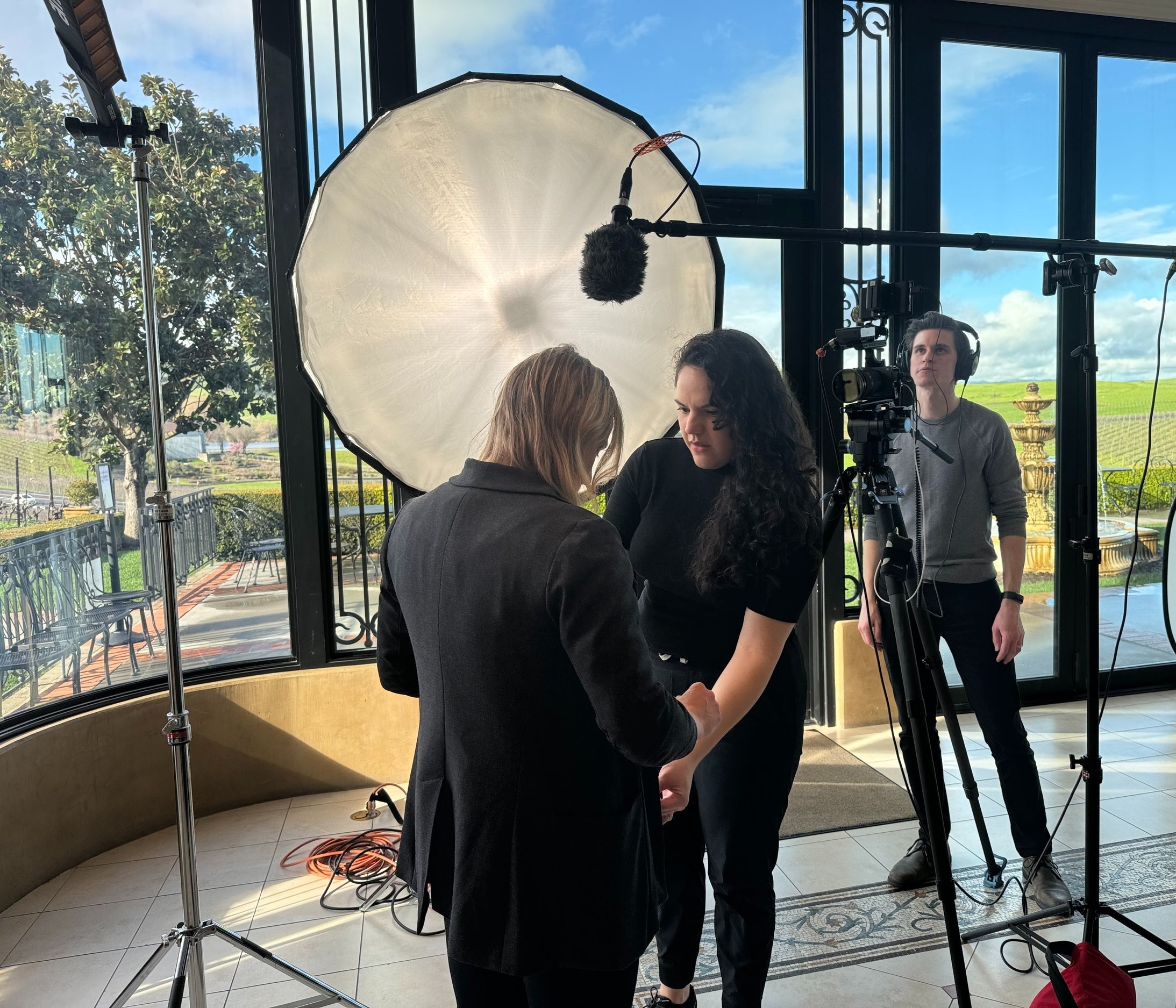
Begin with a low-budget video checklist. First, select the member of your team who plays well on camera. This needs to be someone chill and articulate who can tell your story in a genuine way. If you don’t have someone in-house, find a local student or an intern who wants to build up their skills. Then, pick a clean but compelling subject for your company introduction videos. For example, give a day in your office, take a tour through a service you provide, or address frequently asked questions from your clients. Shortlist what you need in each shot and keep a tight script. This saves time and gets everyone to know their role.
Concentrate on your narrative, not the cost of your equipment. What viewers want is a story they can relate to, not a slick, expensive commercial. Use your phone camera if you have to. Set it still, with daylight or with a lamp for nice illumination. For audio, try laying down a backup phone nearby to capture clearer audio in the event your primary mic cuts out. This one easy trick can rescue a shoot. For scenes that require an extra bit of flair, throw in some stock footage. For instance, if you mention your city, flash a stock clip of the skyline. This creates an atmosphere without additional expense, similar to how effective brand videos enhance viewer engagement.
Cut your video with free or cheap tools. There’s plenty of software that is cheap and easy to learn. You can trim, trim, and overlay text or music with these apps. For a lot of you, editing is where your video really shines. Experiment with daring cuts, employ quick cuts, or intersperse images. The old saying “film is made in the editing room” applies nicely here. Some creative editing can cover rough spots and make the final video look far better than the raw clips.
Join forces to cut expenses. Most of us now know how to shoot, edit, or appear on video. Leverage your network or hit up a nearby college for interns desperate for some real material to flash on their reels. If you’re planning a shoot, give everyone advance notice. Set call times and roles so you use each minute well. This saves you from a last-minute rush and eliminates wasted shots.
Keep your biz videos short. For a lot of social sites, long clips don’t work. Aim for videos that are 1 minute or less. If you require more explanation, create a sequence of brief clips, not an extended one. Each should have a singular objective, such as demonstrating a tip, illustrating a client story, or addressing a straightforward question. By focusing on concise messaging, you can create impactful marketing videos that resonate with your audience.
Conclusion
Now you have witnessed how the right videos can demonstrate your skills and establish trust. A good “how we work” video gives people a window into your tribe in action. Brief client endorsements provide genuine evidence of high-impact outcomes. A clean explainer can break down your process in plain talk. These formats work across many fields, from tech support to health care. You don’t need fancy equipment or a large budget to begin. Good sound, smooth shots, and authenticity matter more. Results appear in more leads and better client calls. Test one little video experience first and watch the difference. Got a tip or a success to share? Leave a comment below and join the conversation.
Frequently Asked Questions
1. What Types Of Business Videos Work Best For Service Providers?
Explainers, testimonials, case studies, and process walkthroughs work well. These formats establish trust, demonstrate your expertise, and provide prospective customers with a fast way to get to know your services.
2. How Can I Make My Business Video Successful?
Concentrate on the straightforward message, fine visuals, and compelling calls to action in your corporate videos. Short, relevant marketing videos drive engagement and conversions.
3. How Do I Align Videos With My Business Goals?
Begin with your objectives for video marketing strategies. Select corporate videos that directly support those goals, whether it be lead generation, brand awareness, or customer education.
4. Why Should I Show My Process In A Video?
She explained that showcasing your process through corporate videos builds trust and expertise. Clients get a glimpse inside how you work, which allows them to trust their decision to hire you.
5. How Do I Measure The Impact Of My Business Videos?
Monitor statistics such as views, engagement, and conversions for your corporate videos. Utilize feedback and analytics to determine what works and optimize your video marketing strategies for the best results.
6. Can I Create Effective Videos Without A Big Budget?
Yes. Make professional corporate videos with a smartphone and free editing apps. Focusing on strong content rather than expensive production is key to effective video marketing.
7. Are Business Videos Useful For All Types Of Service Providers?
Of course. Regardless of your business, corporate videos clarify your services, showcase your advantages, and engage customers on a human level.
Showcase Your Brand With Peakbound Studio’s Business Video Expertise
Not sure what type of video will make the biggest impact for your business? Choosing the right format matters. At Peakbound Studio, we help brands identify and produce the video types that best fit their goals—whether you’re building trust, explaining services, or driving conversions.
From brand videos that define your identity to explainer videos that clarify complex ideas, we craft visual stories that connect with your audience and strengthen your message. Need to boost engagement? We create social media clips designed for maximum shareability. Want to earn credibility? Our testimonial videos spotlight real client experiences. Looking to educate or onboard? We’ll script and produce training and tutorial videos that make learning clear and engaging.
Every video we produce blends cinematic quality with strategic intent. We handle everything from planning and scripting to filming, editing, and optimization for each platform. The result is content that looks polished, performs well, and aligns perfectly with your brand’s voice.
When your business videos reflect purpose and quality, your audience feels it. Let Peakbound Studio help you choose and produce the right video types to elevate your brand story. Contact us today to start planning your next project.